In 2026, the question “What is the weight limit for a standard home lift” has no single universal answer. Most residential lifts carry between 250 and 450 kilograms, depending on the drive system, cabin size, shaft design, and local safety requirements. Compact wheelchair lifts often sit near the lower end. Larger through-floor models may carry more.
That sounds simple. It is not.
The European Lift Association’s market guidance and EN 81-41 requirements show why capacity must be assessed as part of the complete installation. ASME A18.1-2023 also treats rated load as a design value, not a casual estimate. Industry market reports from Research and Markets and Fortune Business Insights describe growing demand for residential accessibility equipment, but they do not define one global household-lift limit.
Lift consultant David Cooper offers a useful warning: “The rated load is not a recommendation; it is a design limit.” His point matters in daily use. Four adults, a wheelchair, shopping bags, and a wet floor can quickly create a different loading situation.
Manufacturers usually list the rated capacity on the data plate and technical sheet. Check both. A lift rated at 300 kilograms may not safely accept a concentrated load in one corner. Door width, platform dimensions, travel height, and emergency lowering systems also affect suitability.
The imperfect part is easy to miss. Product brochures can make capacity look like the only decision. It is not. A qualified installer should verify the building structure, intended users, local code, and realistic loading pattern before purchase. Always confirm the final limit with the manufacturer’s engineering documentation.
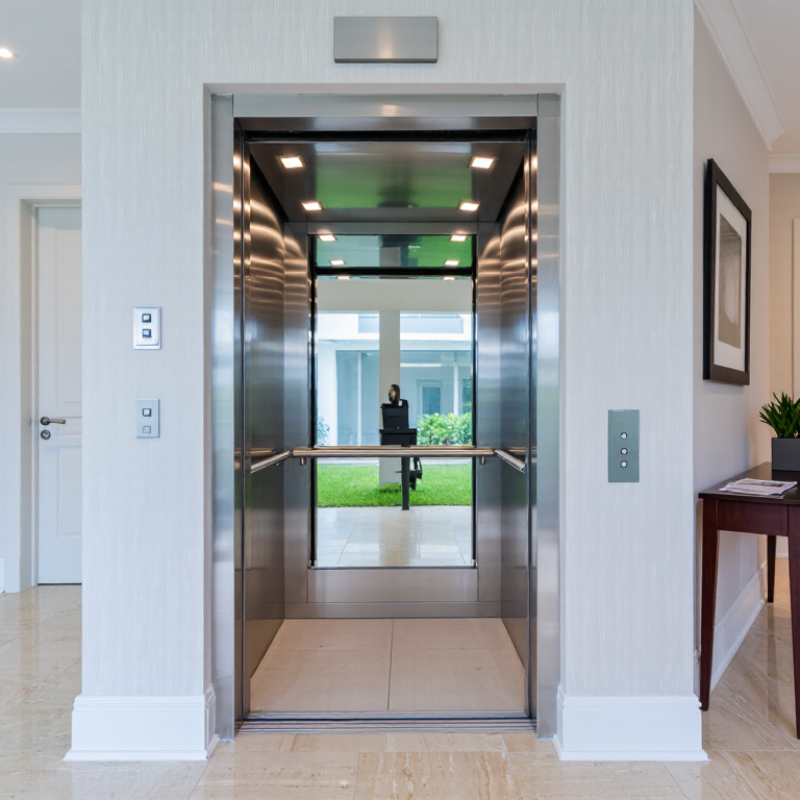
What Is the Typical Weight Limit of a Home Lift in 2026?
What Is the Typical Weight Limit of a Home Lift in 2026?
In 2026, a typical home lift supports about 250 to 400 kilograms. That range suits two to five adults, depending on cabin size. Compact lifts may carry only 225 kilograms. Larger wheelchair-accessible models can support 450 kilograms or more. There is no universal weight limit for every home lift. The rated capacity depends on the motor, platform, cabin dimensions, shaft design, and local safety requirements.
A neat number can be misleading. A lift rated for 350 kilograms may feel unsuitable when carrying a wheelchair, groceries, and several passengers together. Weight distribution also matters. A heavy item placed near one side can affect comfort and operation. For reliable planning, check the technical data plate and installation documents. A qualified lift installer should confirm the capacity during the site assessment. Annual inspections and maintenance are also important, especially in homes with frequent daily use. I would not rely on guesswork here.
Tips: Count the heaviest realistic load, not the average household load. Leave a sensible safety margin. Measure the wheelchair, door width, and cabin floor space before choosing a model. Ask for documented load testing and emergency-operation details. Small details are easy to miss.
How Home Lift Capacity Is Measured and Classified
2026 Top Home Lift Weight Limit: What Is It?
A home lift’s weight limit is its rated load, not the cabin’s empty weight. Capacity is usually measured in kilograms and reflects the combined weight of passengers, mobility equipment, and carried items. A lift rated for 300 kg may support three adults, but actual use depends on their size and movement. Engineers assess the cabin, drive system, suspension, brakes, and supporting structure together. They also consider starting, stopping, repeated travel, and uneven loading. It is not just a simple floor-scale test. Classification may include passenger capacity, platform size, travel height, duty cycle, and intended accessibility use. A wheelchair user may need more floor area, even when the total weight remains below the stated limit. In practice, the safest rating is the one confirmed for the complete installation, not a number copied from a sales page.
Tips: Check the data plate and technical documents. Add people and equipment together. Leave a sensible margin. Do not treat the limit as a target. A lift that feels spacious can still be overloaded. Ask a qualified installer how local structure, doorway width, and emergency systems affect the rating. I would not guess from appearance; compact equipment can hide serious load restrictions. Capacity labels can also be misunderstood when kilograms are converted into passenger counts. Recheck the calculation when household needs change.
Key Factors That Determine a Home Lift’s Maximum Load
2026 Top Home Lift Weight Limit What Is It?
Key Factors That Determine a Home Lift’s Maximum Load
A home lift’s weight limit is not a universal number. Many residential models support between 250 and 450 kilograms, but the correct rating depends on the complete installation. The rated load must include passengers, mobility aids, luggage, and anything carried inside the cabin. A wheelchair and one adult can already approach a smaller lift’s limit.
Cabin size is a major factor. A wider platform adds comfort, but it also increases structural weight and motor demand. The lifting system, guide rails, suspension method, and braking equipment must work together. Travel height matters too. A lift serving several floors may need stronger components than one moving between two levels. Door design, shaft dimensions, and available electrical power can further restrict the practical capacity.
A common assessment mistake is focusing only on the motor. The building structure, floor strength, and anchoring points also need professional inspection. Load tests should follow the manufacturer’s instructions and applicable local safety requirements. Never treat the maximum rating as a comfortable daily target. Regularly carrying the full limit may increase wear and reduce smooth operation. The uncomfortable part is that household habits change. A lift planned for two adults may later carry a wheelchair, shopping bags, or care equipment. Rechecking the load plan before installation can prevent an expensive redesign. Some specifications look precise, yet real homes rarely behave perfectly.
Weight Limits for Different Types of Residential Lifts
2026 Top Home Lift Weight Limit: What Is It?
Residential lift capacity depends on the lift type, cabin size, and installation design. A stair lift commonly carries 300–350 pounds, while heavy-duty models may support 400–600 pounds. Vertical platform lifts often carry 750–1,000 pounds. Some larger units reach 1,400 pounds, according to capacity ranges used in accessibility equipment specifications and ISO 9386-1 guidance.
Home elevators usually provide a rated load between 950 and 1,400 pounds. That range supports several passengers, a wheelchair, or modest household cargo. ASME A17.1/CSA B44 and related safety requirements treat rated load as an engineering limit, not a suggestion. A 1,000-pound rating includes people and belongings together. It does not mean 1,000 pounds of luggage.
Measure carefully. Door width matters. So does turning space. A wheelchair, caregiver, and shopping bags can quickly approach the limit. In practical planning, staying below the published rating gives better operating comfort, although it is not a substitute for professional load calculations. The 2024 market analyses from Grand View Research and Fortune Business Insights show expanding demand for residential accessibility equipment, but their market categories combine different lift technologies. Their figures should not be mistaken for a universal capacity standard. Product data can also be incomplete. Site conditions, travel height, platform dimensions, and local inspection rules may reduce the permitted load. Check the data plate and installation documents. Guessing is unsafe.
How to Choose the Right Home Lift Capacity Safely
2026 Top Home Lift Weight Limit: What Is It?
Choosing a home lift capacity safely requires more than checking one person’s weight. A lift rated for 300 kilograms may carry several passengers, a wheelchair, and small luggage. Yet the available floor area, door width, and cabin design also affect safe use. A crowded cabin can make the stated limit feel misleading.
Measure the heaviest expected load carefully. Include the user, wheelchair, walking aid, shopping bags, and seasonal clothing. Add a sensible margin for unexpected weight. Do not treat this margin as extra permission to overload the lift. A professional site survey should check floor strength, shaft space, power supply, emergency lowering, and landing access. Ask for the rated load, not merely the maximum number of passengers.
Safety depends on more than capacity. The lift should include overload detection, reliable door interlocks, emergency communication, and scheduled inspections. Local building rules and accessibility requirements may also influence the suitable model. A qualified installer should confirm these details in writing.
Small details matter. A narrow turning space can make a large-capacity lift difficult to use. A family may also choose a lower capacity to save space, then regret it later. That choice deserves careful reflection. Needs can change after an injury, surgery, or years of daily use. Choose for realistic future use, not only today’s measurements.
2026 Top Home Lift Weight Limit: What Is It? How to Choose the Right Home Lift Capacity Safely
| Rated Load |
Approximate Imperial Equivalent |
Typical Residential Use |
Possible User Combination |
Mobility Equipment Considerations |
Recommended Selection Level |
Important Safety Check |
| 225 kg |
496 lb |
Compact residential lift for one user or light household transport. |
One adult with personal items, provided the total combined weight remains below the rated load. |
May suit some walking aids and compact mobility devices. Check the platform or cabin dimensions separately. |
Compact capacity |
Confirm that the user, mobility aid, luggage, and any carried items together remain within the stated limit. |
| 250 kg |
551 lb |
Common entry-level capacity for a small home lift or platform lift. |
One wheelchair user with an attendant may be possible, depending on the combined weight and available floor area. |
A manual wheelchair may fit more easily than a large powered wheelchair. Verify door width, platform size, and turning space. |
Basic wheelchair access |
Do not assume that a wheelchair user plus attendant will always fit or remain within the load limit. |
| 320 kg |
705 lb |
Medium-capacity residential lift for more comfortable daily access. |
One wheelchair user and attendant, or several standing occupants, when the combined mass and space requirements are suitable. |
Often provides more practical allowance for a powered wheelchair, but the lift must be rated and sized for that equipment. |
General-purpose choice |
Check the manufacturer’s stated maximum number of occupants and the permitted load distribution. |
| 400 kg |
882 lb |
Larger home lift for frequent wheelchair use, heavier mobility equipment, or multiple occupants. |
One powered wheelchair user with an attendant and personal items, subject to the actual weights and cabin dimensions. |
More suitable for larger powered wheelchairs or scooters only when the platform, door, ramp, and turning dimensions also allow them. |
Enhanced accessibility |
Higher capacity does not compensate for inadequate floor space, doorway clearance, ramp strength, or structural support. |
| 500 kg |
1,102 lb |
Heavy-duty residential installation where higher loads or several occupants are expected. |
Multiple occupants, a wheelchair user with an attendant, or heavier equipment, only within the lift’s certified occupancy and layout limits. |
Can provide greater flexibility, but the home structure, pit or shaft arrangement, power supply, and landing areas may require additional design work. |
High-capacity option |
Use only after a site survey and confirmation that the building structure and local regulations support the installation. |
Safe capacity rule: Select a lift whose certified rated load is greater than the combined weight of every person, wheelchair or mobility device, luggage, and other items carried at the same time. Never exceed the lift’s posted rated load. Capacity ranges above are typical residential planning categories, not universal legal limits; the exact limit depends on the specific lift design, installation, local building regulations, and certification requirements.
Before purchase: Verify the rated load, usable cabin or platform dimensions, clear door width, loading method, emergency operation, maintenance requirements, electrical supply, and permitted occupant count with a qualified lift installer and the applicable local authority.
FAQS
It measures the combined weight of passengers, mobility equipment, and carried items. The cabin’s empty weight is not included. A 300-kilogram rating is not a target.
Add every likely item, including people, wheelchairs, walking aids, bags, and seasonal clothing. Use the heaviest realistic combination. Leave room.
Not always. Passenger counts can hide differences in body size, movement, and equipment. Three adults may exceed a rating when luggage or mobility devices are included. The number can mislead.
Yes. A wheelchair may require extra floor area, turning space, and wider door access. The total weight can remain acceptable while the cabin feels unusable. Space matters too.
A qualified installer can check floor strength, shaft space, doorway width, power supply, and landing access. They should confirm the complete installation’s rated load in writing. Appearance is not enough.
Ask about overload detection, door interlocks, emergency communication, and emergency lowering. Scheduled inspections also support safer operation. Capacity alone is not safety.
Choosing the smallest suitable capacity may save space, but future needs can change. An injury, surgery, or heavier equipment may alter daily use. Today’s measurement may become wrong.
Check the data plate and technical documents supplied for the complete installation. Do not rely only on a sales-page figure or a quick visual estimate. Recheck the calculation when household needs change.
Conclusion
In 2026, a typical home lift can often carry between 250 and 450 kilograms, although the exact limit depends on its design, installation conditions, and intended use. The question “What is the weight limit for a standard home lift” cannot be answered with one universal figure because residential lifts are classified by rated load, cabin size, drive system, and safety requirements. Capacity is measured by the combined weight of passengers, mobility equipment, luggage, and any other items inside the cabin.
Several factors influence maximum load, including the lift structure, motor performance, shaft dimensions, door configuration, travel distance, and building support. Compact platform lifts generally support lighter loads, while enclosed residential elevators may provide higher capacity. When choosing a lift, homeowners should estimate typical usage, allow room for future needs, and select a model with an appropriate safety margin. Professional assessment and correct installation are essential to ensure reliable operation without exceeding the rated limit.
 Dave Lift
