Dave Lift Dave Lift

How to Install a Wheelchair Lift Outdoors in 2026?

Time:2026-09-19 Author:Sienna
0%

Can a wheelchair lift be installed outdoors? Yes, but safe installation requires more than placing a platform beside exterior steps. The lift must suit rain, snow, wind, temperature changes, drainage, and daily wheelchair use. A covered platform can help, but it does not replace proper design.

The World Health Organization reports that about 1.3 billion people, or 16% of the global population, experience significant disability. Its Global Report on Health Equity for Persons with Disabilities identifies inaccessible transport and buildings as major barriers. These findings make outdoor vertical access more than a convenience. It can determine whether someone reaches a front door, clinic, workplace, or community space independently.

Dr. Rory Cooper, a rehabilitation engineer and wheelchair-accessibility expert, has said, “Accessibility is not a luxury; it’s a necessity.” That principle matters when choosing an outdoor lift. The 2026 installation process should consider platform size, load capacity, emergency lowering, weather protection, lighting, guardrails, and clear approach space. ASME A18.1 provides widely recognized safety requirements for platform lifts and stairway chairlifts. Local building and electrical requirements may also apply.

Real sites are rarely perfect. A sloped yard, frozen landing, or narrow gate can change the entire plan. I have seen attractive installations become difficult to use because water collected near the entry. Small details matter. This guide explains how to assess the site, select equipment, prepare the foundation, and plan maintenance. It also examines common mistakes, because outdoor accessibility deserves careful reflection rather than confident assumptions.
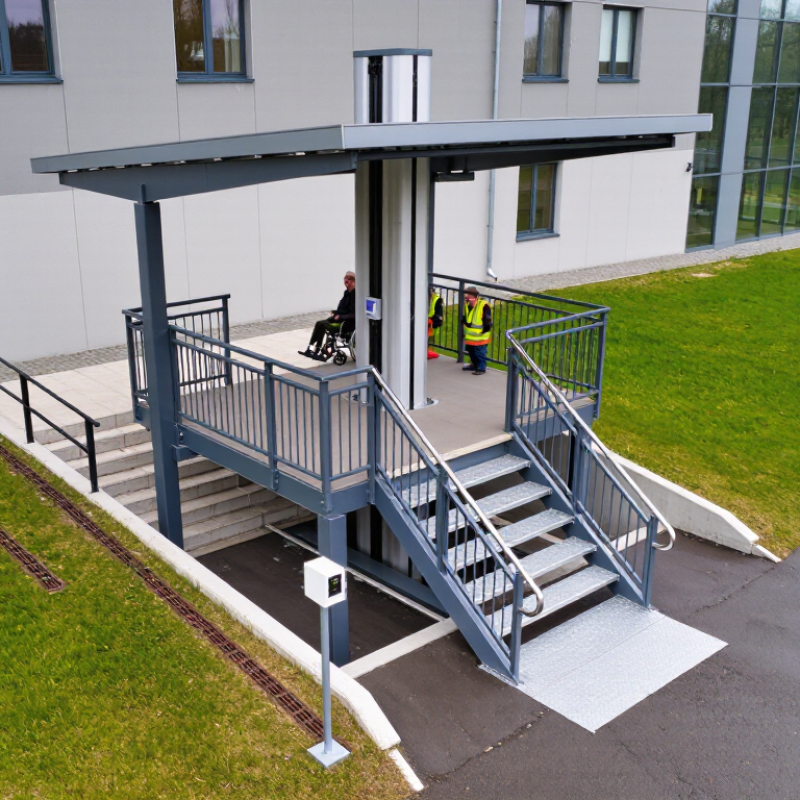
How to Install a Wheelchair Lift Outdoors in 2026?

Outdoor Wheelchair Lift Types and 2026 Accessibility Requirements

How to Install a Wheelchair Lift Outdoors in 2026?

Outdoor wheelchair lifts usually fall into two categories: vertical platform lifts and inclined platform lifts. A vertical lift moves between levels beside a porch, deck, or entrance. An inclined model follows a staircase and may suit narrow properties. Choose the lift after measuring the rise, landing depth, pathway width, and turning space. A compact site can still fail if the chair cannot turn safely at the top.

In 2026, accessibility requirements still depend on the local authority and adopted building code. Confirm permit rules before ordering equipment. The installation may require a firm foundation, edge protection, weather-resistant controls, emergency lowering, door interlocks, and clear transfer landings. The accessible route should connect the public walkway to the lift without steep breaks or loose gravel. Keep drainage away from the platform. Rainwater often exposes weak planning.

From practical site checks, I would leave more clearance than the minimum whenever space allows. A few extra inches can help when a user approaches at an angle. Confirm the lift’s rated load, platform size, operating temperature, and backup power. Test every control from the platform and each landing. I once saw a nearly finished installation delayed because a gate opened into the required landing area. It looked acceptable on paper, but the wheelchair could not maneuver comfortably. Inspect fasteners, sensors, cables, and drainage regularly. Outdoor equipment needs attention, even when it appears clean and quiet.

How to Assess the Installation Site and Measure Lift Dimensions

How to Install a Wheelchair Lift Outdoors in 2026?

A reliable outdoor lift installation begins with a careful site assessment. Inspect the ground, drainage, wall strength, and nearby obstacles. Soft soil may require a reinforced concrete foundation. Standing water can damage components and create slippery access areas. Measure the vertical rise from the lower landing to the upper landing. Do not estimate this distance. Record it at several points, because older surfaces may slope or settle. Also measure platform length, platform width, doorway clearance, and available headroom. My first measurements once ignored a door swing. That small mistake changed the entire layout.

Tips: Use a laser level and a steel tape. Record every measurement twice. Photograph obstacles before planning.

Leave clear space beside both landings for safe transfers and turning. Check whether handrails, gates, posts, or roof edges interfere with movement. Measure the travel path from the approach area, not only the lift footprint. An accessible route should remain firm, well lit, and free from sudden level changes. Confirm electrical access, weather protection, and emergency controls with a qualified installer. Local building and accessibility requirements may affect foundation depth, guardrails, drainage, and clearances. Requirements vary by location. A site visit from a licensed professional can reveal structural problems that measurements miss. Recheck the plan after rain or frost; outdoor conditions often expose weak assumptions.

How to Prepare the Foundation, Power Supply, and Drainage

How to Install a Wheelchair Lift Outdoors in 2026?

An outdoor wheelchair lift needs a stable, level foundation before any mechanical work begins. Inspect the soil, slope, frost risk, and nearby drainage paths. Soft ground can shift after heavy rain, causing uneven movement and unsafe platform alignment. A reinforced concrete pad is usually suitable, but its size and depth should follow the lift’s load requirements and local building guidance. Leave enough working space around the platform and keep access routes clear.

Power planning deserves equal attention. Use a dedicated circuit sized by a qualified electrician, with suitable grounding and weather-resistant protection. The disconnect should remain visible and reachable without entering the lift area. Outdoor cables need protection from water, sunlight, impact, and rodents. I would recheck the cable route after installation; hidden low points can collect water. Small oversights become expensive repairs.

Tips: Shape the surrounding surface so water flows away from the foundation. Add compacted gravel or a drainage channel where runoff gathers. Do not allow soil, mulch, or paving to touch electrical enclosures. Test the lift only after the concrete has fully cured and the power system has passed inspection. Keep a simple record of foundation dimensions, electrical checks, and drainage changes. It may feel unnecessary, but future maintenance becomes much easier.

How to Install and Secure the Outdoor Wheelchair Lift

Outdoor wheelchair lift installation begins with a site inspection, not the lift itself. The World Health Organization reports that 1.3 billion people experience significant disability worldwide. Safe access therefore requires careful planning, especially around uneven ground, rain, and snow.

Measure the travel height and landing depth precisely. A level concrete pad should support the lift without settling. Check soil strength, drainage, and clearance from doors or vehicle paths. Use corrosion-resistant anchors rated for the lift’s operating load. Follow the manufacturer’s engineering instructions and ASME A18.1 safety requirements. Local building and electrical rules may add requirements.

Secure every landing gate and verify that interlocks stop movement when a gate opens. Install weather-rated wiring, protected disconnects, and grounded electrical components. Test the emergency stop, backup lowering system, alarms, and platform controls before use. The CDC reports that about one in four U.S. adults has a disability, so controls should remain reachable and easy to understand.

During commissioning, run several empty cycles, then perform a controlled load test. Watch for vibration, platform sway, water pooling, and unusual sounds. I would not accept a slightly loose anchor. It may worsen after repeated rain and freezing. Installation manuals help, but a licensed professional should inspect structural anchoring and electrical connections. My own practical caution is simple: outdoor conditions change faster than drawings suggest. Recheck the lift after the first severe storm and document every adjustment.

How to Test, Maintain, and Safely Operate the Lift

How to Install a Wheelchair Lift Outdoors in 2026?

Outdoor installation is only the beginning. A qualified technician should verify the foundation, anchor points, drainage, and electrical protection. The platform must remain level, even after rain or frost. Keep the travel path clear of stones, snow, tools, and loose cables. Check guardrails, gates, ramps, and entry surfaces before every use. A professional should also confirm that the installation follows current local safety requirements and the lift’s instructions.

Testing should happen in controlled stages. Run the lift without a passenger first. Listen for grinding, clicking, or uneven movement. Test the emergency stop, warning signals, door interlocks, and backup lowering system. Then perform a supervised load test using the specified capacity, never improvised weights. Keep hands, feet, and mobility equipment inside the marked platform area. One missed inspection can matter. A lift may look stable while moisture has weakened a connection.

Tips: Wipe rainwater from controls before operation. Inspect bolts and seals monthly. Remove ice with a plastic tool, not force. Keep a maintenance log with dates, faults, repairs, and technician names. Stop using the lift when it shakes, stalls, smells overheated, or moves differently. Contact a qualified service professional instead of adjusting internal parts yourself. Operators should receive practical training and repeat it after long periods without use. Clear communication helps, but it cannot replace inspection.

FAQS

What should be checked before installing an outdoor wheelchair lift?

Inspect soil strength, slope, frost risk, drainage, and nearby doors or vehicle paths. A level foundation matters. Leave clear working space around the platform.

What type of foundation is usually suitable?

A reinforced concrete pad is commonly suitable. Its size and depth must match the lift’s load requirements and local building guidance. Soft ground may shift after heavy rain.

How can drainage problems be prevented?

Shape nearby surfaces so water flows away from the foundation. Use compacted gravel or a drainage channel where runoff collects. Do not let mulch or soil touch electrical enclosures.

What electrical preparation is needed outdoors?

A qualified electrician should install a dedicated circuit with proper grounding. Use weather-resistant protection and a visible, reachable disconnect. Protect cables from water, sunlight, impact, and rodents.

How should the lift be anchored?

Use corrosion-resistant anchors rated for the operating load. Follow the engineering instructions and local safety requirements. I would reject even a slightly loose anchor.

What safety features require testing?

Test landing gates, interlocks, emergency stops, alarms, and backup lowering systems. An open gate should stop movement immediately. Controls must remain reachable and easy to understand.

How should commissioning be performed?

Run several empty cycles before testing with a controlled load. Watch for vibration, platform sway, water pooling, and unusual sounds. Small noises deserve attention.

When should the installation be checked again?

Recheck the lift after the first severe storm, freezing period, or heavy rainfall. Inspect anchors, wiring, drainage, and platform alignment. Keep records of dimensions, inspections, and adjustments.

Conclusion

Installing a wheelchair lift outdoors in 2026 requires careful planning, accurate measurements, and attention to current accessibility requirements. Can a wheelchair lift be installed outdoors? Yes, when the equipment is suitable for exterior conditions and the site is properly prepared. Begin by selecting an appropriate lift type, then evaluate the entrance, travel height, available clearance, user access, weather exposure, and emergency routes. Measure the platform, doorways, landing areas, and vertical travel distance before installation.

A stable foundation, reliable power supply, effective drainage, and adequate weather protection are essential for safe performance. The lift must be securely anchored, aligned, and tested through its full range of motion. Safety devices, controls, gates, and emergency features should be checked before regular use. Routine cleaning, lubrication, inspections, and prompt repair of worn or damaged parts help maintain dependable operation. Users should also receive clear instructions on loading, positioning, weight limits, and emergency procedures.

Sienna

Sienna

Sienna is a skilled marketing professional with a deep expertise in our company’s core products and services. With a passion for innovation and detail, she plays a pivotal role in crafting insightful blog posts that not only highlight the unique features of our offerings but also provide valuable......